
🔥 Black Friday Tire Inflator Deals: picks worth watching →
You are on a road trip, and your tire pressure warning light flickers on. You pull over, but the gas station air pump is broken. Without a reliable tire inflator with a pressure gauge, you are stuck guessing or overinflating. This guide covers the best car tire inflator with pressure gauge for 2026, helping you choose a tool that is accurate, durable, and easy to use for cars, trucks, SUVs, and more.
We have reviewed nine top-rated models from brands like AstroAI, Rhino USA, Spurtar, and Airmoto. Whether you need a digital gauge for precision or a portable cordless pump for emergencies, our picks cover every need. For more options, check out our guide on the best tire inflator with digital gauge.




Buying Guide
Accuracy and Pressure Range
Look for a gauge with high accuracy, ideally within 1% of the true pressure. A wide PSI range, such as 3-250 PSI, covers everything from bicycle tires to heavy truck tires. Digital displays with 0.1 PSI resolution give you precise control. Analog dials, while durable, may have coarser increments. For consistent results, consider models like the best home tire inflator with gauge.
Build Quality and Hose Length
A heavy-duty construction with brass fittings and a braided stainless steel hose resists wear and corrosion. A longer hose, around 19 to 24 inches, reaches awkward valve stems without straining. Look for a locking chuck that creates a leak-free seal, especially on older valve stems. A rubber hose is flexible but may kink; a braided hose offers better durability.
Ease of Use and Portability
Choose a model with a comfortable grip and easy-to-read display. Backlit LCD screens are helpful in low light. Features like a trigger for inflation and a button for deflation simplify one-handed operation. For portable cordless models, check battery life and charging options. The best 12V tire inflator with LED light can be a great roadside companion.
Compatibility and Versatility
Ensure the inflator works with your vehicle’s valve type (Schrader or Presta). Some models include adapters for balls, air mattresses, or sports equipment. A versatile tool can serve multiple purposes, from topping off car tires to inflating bike tires or sports balls. Check the maximum PSI rating to ensure it meets your needs.
Final Thoughts
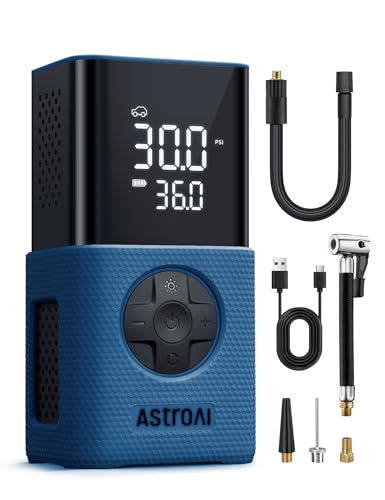
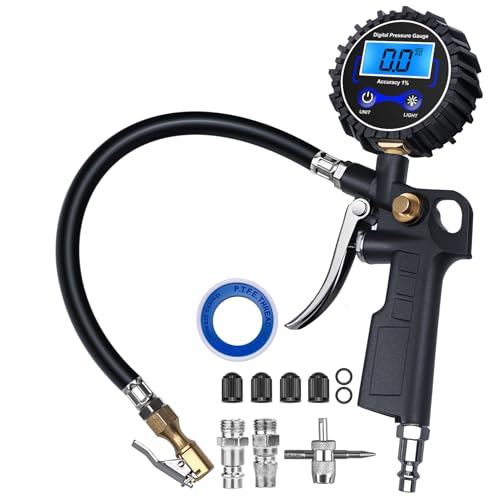
Choosing the right tire inflator with a pressure gauge comes down to your primary use. For garage enthusiasts who need pinpoint accuracy and a durable build, the AstroAI Digital Tire Pressure Gauge with Inflator offers a reliable digital readout and a heavy-duty brass chuck. If you prefer a portable cordless option for emergencies and road trips, the AstroAI L7 Tire Inflator Portable Air combines fast inflation with an auto-shutoff feature. Both models deliver the precision and convenience you need to keep your tires at the ideal pressure.
Frequently Asked Questions
How often should I check my tire pressure?
You should check your tire pressure at least once a month and before long trips. Temperature changes can affect pressure, so check more frequently during seasonal shifts. Using a reliable tire inflator with a pressure gauge helps maintain optimal pressure for safety and fuel efficiency.
Can I use a tire inflator with a pressure gauge on my motorcycle?
Yes, most models with a standard Schrader valve work on motorcycle tires. However, check the minimum PSI range; some gauges start at 3 PSI, which is suitable for motorcycle tires. For low-pressure tires, a gauge with fine resolution is helpful. For more options, see our guide on the best home tire inflator with auto shut off.
What is the difference between a digital and analog tire pressure gauge?
Digital gauges provide precise readings with a clear LCD display, often in multiple units. Analog gauges use a dial and are more durable but may have less precision. Digital models are easier to read in low light, while analog gauges are less affected by battery failure.
How do I ensure an accurate reading from my tire inflator gauge?
Always seat the chuck fully onto the valve stem and lock it to create a tight seal. Check the pressure when the tire is cold, as heat from driving increases pressure. Allow the reading to stabilize for a few seconds. Small variations of about 2 PSI between different gauges are normal.