
🔥 OBD2 Scanner Black Friday Deals for 2026: picks worth watching →
You are about to tighten a critical bolt on your carbon fiber handlebars. You apply a little too much force and hear a faint crack. That sinking feeling means you have just damaged expensive components. Using the best torque wrench for bicycles eliminates this risk entirely, giving you precise control over every fastener on your ride. This guide reviews five top-rated torque wrench sets designed specifically for bicycles, from budget-friendly kits to professional-grade tools. Whether you maintain a road bike, mountain bike, or e-bike, we have a recommendation for you. For more on precision tools, check out our best torque wrench set guide.


Buying Guide: What to Look for in a Bike Torque Wrench
Torque Range and Accuracy
The ideal torque range for bicycle work spans from 2 Nm to 25 Nm. Most stem bolts, seat clamps, and derailleur hangers fall within this window. A wrench with micro-adjustment to 0.1 Nm lets you match manufacturer specifications exactly. Look for certified accuracy of at least +/- 3% to ensure consistent, reliable results. For more on precise adjustments, read our best torque wrench for 4 nm.
Click Mechanism and Feel
A clear, audible click when reaching the preset torque value is essential. Higher-end wrenches produce a strong click above 5 Nm, while lower ranges require a bit more attention. The tactile feedback through the handle helps you avoid overshooting the target. A reversible ratchet head with fine teeth (72-tooth) allows use in tight spaces.
Included Bit Sockets and Kit Completeness
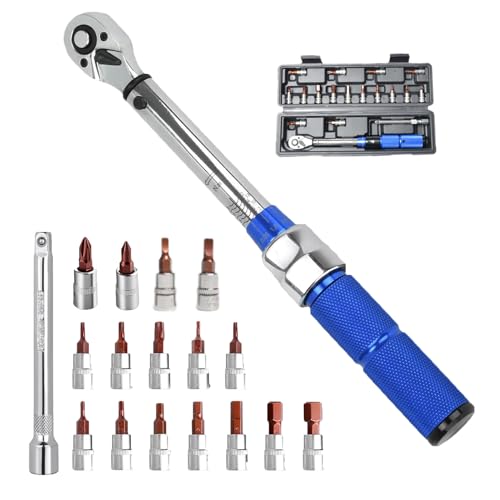
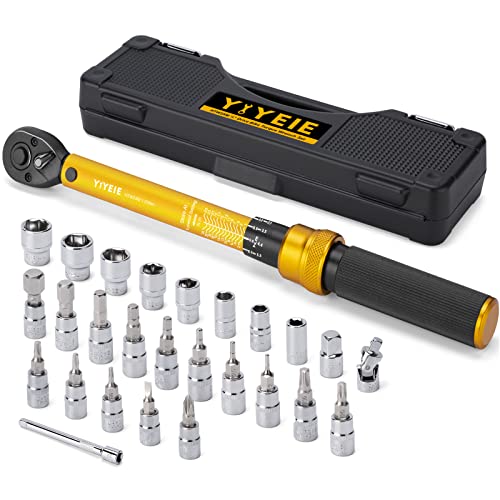
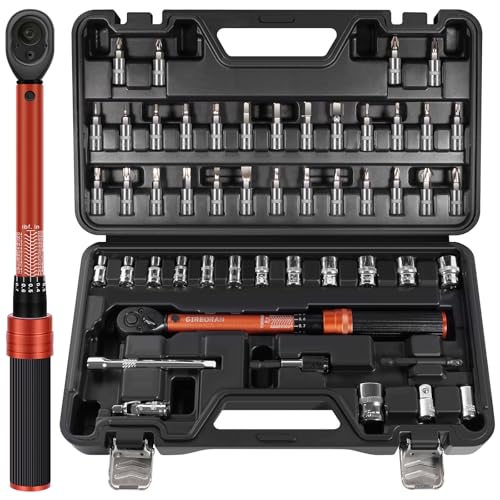
Bicycle fasteners use a mix of hex, Torx, and Phillips heads. A comprehensive kit includes the common sizes: H2 through H8, T10 through T30, and a few screwdriver bits. An extension bar helps reach recessed bolts. A molded storage case keeps everything organized and portable. For a broader look at garage essentials, see our best air impact wrench guide.
Build Quality and Durability
Choose a wrench made from hardened steel or aerospace aluminum for long-term reliability. The ratchet head should resist rust and corrosion. An ergonomic, non-slip handle provides comfort during extended use. Many quality tools come with a calibration certificate and a unique serial number for traceability.
Final Thoughts
Choosing the best torque wrench for bicycles comes down to your specific needs and budget. For a comprehensive kit that covers nearly every fastener on your bike, the YIYEIE 50Pcs Master Bike Torque Wrench Set offers exceptional value with its wide range of bits and precise micro-adjustment. If you prefer a compact, portable tool for on-the-go adjustments, the MARQUE Adjustable Bike Torque Wrench – 4, 5 delivers reliable click-stop protection in a small form factor that fits in your saddlebag. Both tools will keep your bike safe and your rides worry-free.
Frequently Asked Questions
What torque range do I need for a bicycle?
Most bicycle components require torque between 2 Nm and 25 Nm. Common values include 4 to 6 Nm for stem and handlebar bolts, 8 to 12 Nm for crank bolts, and 15 to 20 Nm for cassette lockrings. A wrench covering 1 to 25 Nm handles nearly all bike tasks.
Can I use a regular torque wrench on my bike?
You can, but a standard automotive torque wrench (typically 10 to 150 ft-lb) is too coarse for delicate bike fasteners. A dedicated bicycle torque wrench with a 1/4-inch drive and inch-pound or Newton-meter scale provides the fine control needed for carbon and aluminum components.
How do I know if my torque wrench is accurate?
Quality torque wrenches come with a calibration certificate and a unique serial number. For ongoing accuracy, have your wrench recalibrated annually or after any drop. Many manufacturers offer recalibration services. For more on choosing reliable tools, read our torque wrench best brand.
What is the difference between a click-type and a beam-type torque wrench?
A click-type wrench emits an audible click and tactile feedback when the preset torque is reached, making it easy to use in tight spots. A beam-type wrench uses a deflecting beam and a scale to indicate torque, which requires a clear line of sight. For bicycle work, a click-type is generally preferred for its convenience and precision.