
You are wrestling with a rusted lug nut on a dark roadside, and a breaker bar just isn’t cutting it. That is the moment you realize you need a tool that delivers raw, relentless power. Whether you are a professional mechanic or a weekend warrior, a high-quality impact wrench can transform your workflow. This guide covers the best impact wrench options on the market today, from budget-friendly powerhouses to professional-grade workhorses. We’ve analyzed torque specs, battery life, and build quality to help you make an informed choice. For more essential garage tools, check out our Garage Tools category.




Buying Guide: What to Look for in the Best Impact Wrench
Torque: The True Measure of Power
Torque is the single most important specification for an impact wrench. It determines how easily you can loosen stubborn, rusted bolts. Breakaway torque (loosening) is often higher than fastening torque. For light automotive work, 500 ft-lbs may suffice, but for heavy trucks or construction equipment, you will want over 1000 ft-lbs. Models like the JESIMAIK Cordless Impact Wrench offer up to 1475 ft-lbs of breakaway torque, making them ideal for heavy-duty tasks.
Battery System: Runtime and Compatibility
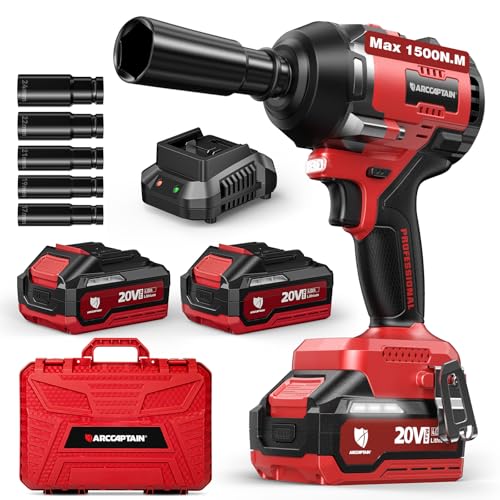
A robust battery system is crucial for cordless freedom. Look for tools that come with two high-capacity batteries (4.0Ah or larger) to minimize downtime. Fast charging capabilities are a major plus. Consider whether you want to stay within a single brand’s ecosystem, like DEWALT’s 20V MAX line, for battery interchangeability across tools. A reliable battery ensures you are never left stranded mid-job.
Speed and Control Settings
Variable speed triggers and multiple speed/torque modes give you precision for delicate tasks and raw power for heavy work. The best impact wrenches offer at least three speed settings. This allows you to avoid over-tightening small fasteners while still having the muscle for lug nuts. Intelligent auto-stop modes, found on many modern models, prevent damage and fastener run-off, adding a layer of safety.
Build Quality and Ergonomics
A durable impact wrench should withstand drops and harsh conditions. Look for brushless motors, which offer longer life and efficiency. Ergonomic design, including a comfortable grip and balanced weight distribution, reduces fatigue during extended use. Compact models are easier to maneuver in tight spaces. For more on essential automotive tools, see our guide on the best car battery charger.
Final Thoughts
Choosing the right impact wrench comes down to balancing power, features, and your specific needs. For those seeking a professional-grade workhorse with exceptional torque and brand reliability, the DEWALT 20V MAX Cordless Impact Wrench stands out as a top performer. If you need a budget-friendly option that does not compromise on power for heavy-duty automotive tasks, the JESIMAIK Cordless Impact Wrench offers incredible value with its high torque output and comprehensive kit. No matter your choice, a quality impact wrench will make your toughest jobs feel effortless.
Frequently Asked Questions
What torque do I need for an impact wrench?
For most passenger car lug nuts, 400-500 ft-lbs of torque is sufficient. For light trucks and SUVs, aim for 700-1000 ft-lbs. For heavy-duty applications like semi-trucks or construction equipment, look for wrenches with over 1000 ft-lbs of breakaway torque.
Is a brushless impact wrench worth it?
Yes, brushless motors are more efficient, run cooler, and last longer than brushed motors. They deliver more power and runtime per battery charge, making them a smart investment for both professionals and serious DIYers.
Can I use an impact wrench for tightening as well as loosening?
Yes, most impact wrenches are designed for both tasks. However, for precise tightening, especially on critical components like wheel lugs, use a torque wrench to confirm final torque. Many modern impact wrenches have settings to help prevent over-tightening.
What is the difference between an impact driver and an impact wrench?
An impact wrench is designed for high-torque applications like removing lug nuts and large bolts, using a 1/2-inch or 3/8-inch square drive. An impact driver uses a hex collet to drive screws and is better for lighter tasks like deck building or furniture assembly.