

Imagine your BMW’s check engine light flickers on during your morning commute. You pull over, grab your generic code reader, and it spits out a cryptic code with no context. You’re left guessing whether it’s a minor sensor issue or a costly repair. This scenario is all too familiar for BMW owners, who often face complex electronics and proprietary systems. A dedicated OBD2 scanner can turn that anxiety into clarity, letting you read codes, view live data, and even perform advanced diagnostics right in your driveway. In this guide, we’ll explore the top OBD2 scanners for BMW vehicles in 2026, covering options for DIYers and professionals alike. Whether you need basic code reading or full-system bidirectional control, we’ve got you covered.
BMWs are known for their performance and engineering, but they also come with a steep learning curve when it comes to diagnostics. Unlike some vehicles, BMWs use specific protocols and modules that generic scanners often miss. That’s why choosing the right tool matters. We’ve spent hours evaluating the latest models, considering factors like system coverage, active testing capabilities, and ease of use. Our goal is to help you find a scanner that not only reads codes but also helps you understand and fix the underlying issues. For more insights on diagnostic tools, check out our guide to BMW diagnostic scanners.




Buying Guide: What to Look for in a BMW OBD2 Scanner
When selecting an OBD2 scanner for your BMW, several key features can make or break your experience. Here are the most important criteria to consider before making a purchase.
BMW-Specific System Coverage
BMWs have multiple control modules, including engine, transmission, ABS, airbags, and more. A scanner that only reads engine codes won’t help you diagnose a faulty airbag sensor or an ABS issue. Look for a tool that offers full-system diagnostics, reading and clearing codes across all available modules. This is especially important for BMWs, where a single fault can trigger warning lights in multiple systems. For example, the FOXWELL NT716 covers four critical systems, while higher-end models like the Autel MX808S access even more.
Bidirectional Control and Active Tests
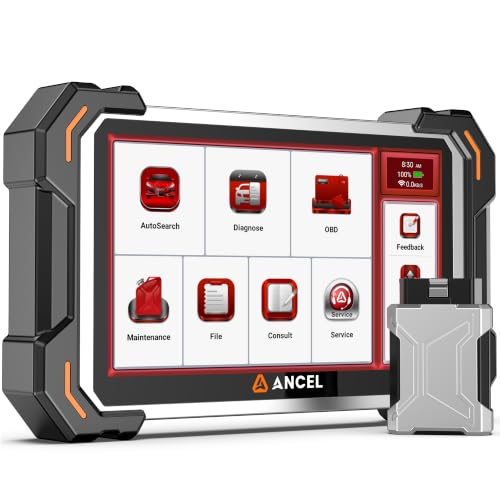
Bidirectional control allows you to command components like fuel pumps, cooling fans, or injectors to activate, helping you verify if they’re working correctly. This feature is invaluable for BMW diagnostics, as it lets you pinpoint faulty parts without guesswork. Scanners like the ANCEL DS500BT and Autel MX808S offer thousands of active tests, making them powerful tools for both DIYers and pros. If you’re serious about troubleshooting, prioritize this feature.
Service and Reset Functions
BMWs often require special resets after maintenance, such as oil service resets, battery registration, or brake pad replacements. A scanner with built-in service functions can save you trips to the dealer. Look for tools that offer oil reset, EPB (electronic parking brake) service, SAS (steering angle sensor) calibration, and ABS bleeding. The FOXWELL NT716 provides nine essential resets, while the ANCEL DS500 Elite offers 28+ maintenance functions. These features can pay for themselves after just one or two uses.
For a deeper dive into what these tools can do, read our review of the FOXWELL NT716 and explore other options in our comprehensive OBD2 scanner guide.
Final Thoughts
Choosing the right OBD2 scanner for your BMW depends on your skill level and budget. For most DIYers, the FOXWELL NT716 Bidirectional OBD2 Scanner 4-System offers an excellent balance of features and affordability, covering essential systems with nine resets. If you need more advanced capabilities, the Autel Scanner MaxiCheck MX808S provides full-system diagnostics and 3000+ active tests, making it a professional-grade choice. Whichever you pick, you’ll be better equipped to keep your BMW running smoothly.
Frequently Asked Questions
Can I use a generic OBD2 scanner on my BMW?
Generic scanners can read engine codes, but they often miss BMW-specific modules and functions. For full access to all systems, you’ll need a scanner that supports BMW protocols, such as the ones we’ve reviewed. Investing in a dedicated tool ensures you can diagnose issues accurately.
What is bidirectional control and why do I need it for my BMW?
Bidirectional control lets you send commands to vehicle components, like turning on a fuel pump or activating a cooling fan, to see if they respond. This helps you verify if a part is faulty before replacing it, saving time and money. It’s especially useful for BMWs with complex electronic systems.
Do these scanners work on all BMW models?
Most scanners cover a wide range of BMW models from 1996 onward, but compatibility can vary. Always check the manufacturer’s website or contact support to confirm your specific model and year. Some advanced features may require additional adapters or software updates.
Can I perform BMW-specific resets like oil service or battery registration?
Yes, many of the scanners we reviewed include service functions for oil resets, battery registration, and more. However, availability varies by model and vehicle. Check the product specifications to ensure it supports the resets you need. For a full list of options, see our OBD2 scanners category.


