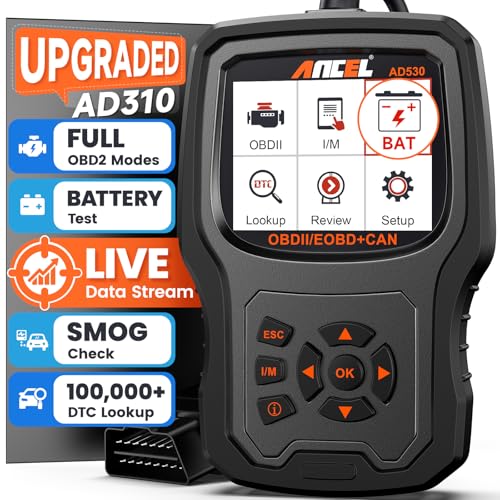

You are under the hood, wrench in hand, staring at a cryptic dashboard light. A basic code reader tells you the error, but you are left wondering which component actually failed. This is where a bidirectional OBD2 scanner changes everything. It sends commands to your car’s systems, letting you activate a fuel pump, cycle a cooling fan, or trigger an injector, all from the driver’s seat. For the DIY mechanic, this capability saves hours of guesswork and prevents unnecessary part replacements. In this guide, we have evaluated the top bidirectional scanners for 2026, covering models from FOXWELL, Autel, TOPDON, and ANCEL, to help you choose the right tool for your garage.
Whether you are a weekend warrior or a serious home mechanic, the right scanner can turn a frustrating diagnostic session into a straightforward repair. We focus on models that offer active tests, multiple system coverage, and useful service resets, all without requiring a professional budget. For more context on the broader category, check out our guide on the best Autel scanner for professional use.




Buying Guide
Bidirectional Active Tests
The core feature of a bidirectional scanner is its ability to perform active tests. This means you can command a component like a fuel pump or window regulator to operate without using the vehicle’s own controls. This capability is crucial for isolating a faulty part. Look for a model that offers a high number of these tests, as it directly correlates with how deeply you can diagnose a problem.
For example, the TOPDON AD500 OBD2 scanner review highlights how active tests can streamline troubleshooting. The more tests a scanner supports, the more versatile it becomes across different vehicle systems.
System Coverage and Service Functions
Beyond engine diagnostics, a capable scanner should access multiple systems: transmission, ABS, SRS, and more. This full-system view is essential for a complete diagnosis. Additionally, look for built-in service functions like ABS bleeding, oil reset, and throttle relearn. These features allow you to perform dealer-level maintenance at home, saving you trips to the shop.
For instance, the FOXWELL NT716 offers nine reset functions, while the Autel MX808S provides 28+ services. Your choice depends on the specific maintenance tasks you anticipate.
Ease of Use and Display
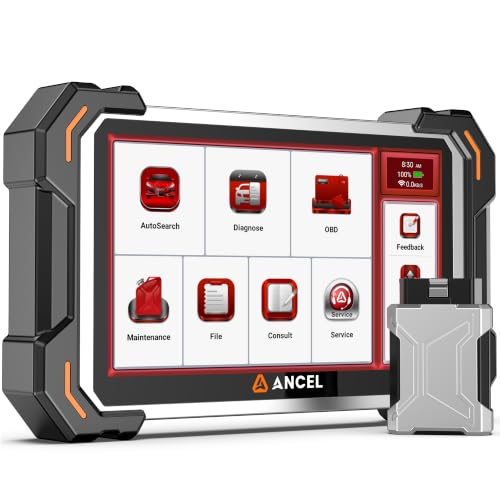
A clear, responsive interface is vital for efficient work. A large touchscreen, like the 7-inch display on the ANCEL DS500BT, makes navigating menus and viewing live data graphs much easier than a small, button-based screen. Look for features like AutoVIN for automatic vehicle identification and wireless connectivity (Bluetooth or Wi-Fi) to move freely around the vehicle during diagnostics.
Software Updates and Vehicle Compatibility
Your scanner is only as good as its software. Lifetime free updates ensure your tool stays compatible with newer vehicle models and receives new features. Also, verify the scanner covers your specific car brand and year. Most models in this guide support over 100 brands, but always check compatibility before purchasing, especially for newer or less common vehicles.
For a deeper look at compatibility, see our comparison of LAUNCH vs autel scan tools.
Final Thoughts
Choosing the right bidirectional OBD2 scanner for your DIY projects comes down to balancing features with your specific needs. For the DIYer who wants a powerful, feature-rich tool without breaking the bank, the FOXWELL NT716 Bidirectional OBD2 Scanner 4-System offers an outstanding mix of active tests, nine essential resets, and a user-friendly touchscreen at a competitive price. If you need the absolute highest number of active tests and service functions for a broader range of vehicles, the Autel Scanner MaxiCheck MX808S is a fantastic investment that rivals professional tools. Both options will elevate your diagnostic game and help you fix your car with confidence.
Frequently Asked Questions
What is the difference between a code reader and a bidirectional scanner?
A basic code reader only retrieves and clears diagnostic trouble codes. A bidirectional scanner goes further by letting you send commands to vehicle components, like activating a fuel pump or testing a window motor, which helps you pinpoint the exact faulty part. This active capability is the key differentiator for advanced DIY diagnostics.
Do I need a bidirectional scanner if I only work on my own car?
Absolutely. Even for a single vehicle, a bidirectional scanner can save you money by preventing unnecessary part replacements. For example, you can verify a fuel pump is the issue before buying a new one. It also allows you to perform maintenance resets like oil or ABS bleeding, reducing trips to the mechanic. It is a worthwhile investment for any serious DIYer.
Will these scanners work on my 2026 model car?
Most modern bidirectional scanners support vehicles from 1996 onward, but specific functions may vary by make and model. For the best results, check the manufacturer’s compatibility list or contact support with your VIN before purchasing. Many models, like the Autel MX808S, offer AutoVIN to automatically identify your vehicle.
What are the most common service functions I should look for?
The most useful service functions for a DIYer include ABS bleeding, oil reset, throttle relearn, and battery registration. These allow you to perform routine maintenance and repairs that typically require a dealer visit. The FOXWELL NT716 and Autel MX808S are excellent examples of scanners that pack many of these functions.