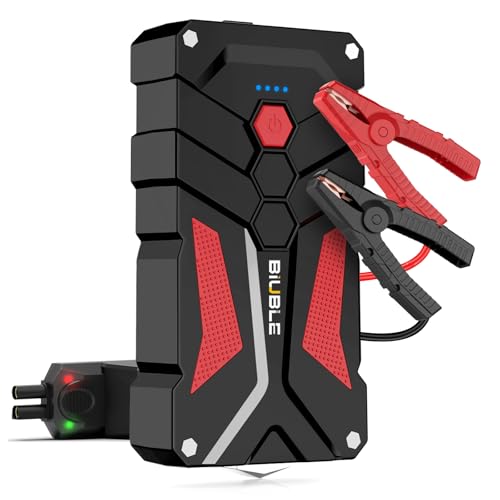

Imagine this: you are out on the lake, the sun is setting, and you turn the key to head back to the dock. Instead of the engine roaring to life, you hear a weak click. A dead boat battery is a common and frustrating problem, but it does not have to ruin your day. A reliable jump starter for your boat can be a lifesaver, turning a potential emergency into a minor hiccup. In this guide, we have evaluated nine top-rated portable jump starters designed to handle marine engines, from small outboards to large diesel inboards. Whether you need a compact unit for your kayak or a heavy-duty booster for your yacht, our picks cover a range of power levels and features. For more on portable power, check out our guide on the best portable jump starter for cars, which shares many of the same principles for marine use.



Buying Guide: What to Look for in a Boat Jump Starter
Peak Amps and Engine Compatibility
The most critical factor is the jump starter’s peak amperage rating. This determines how much power it can deliver to crank your engine. For small boat engines (under 3.0L gas or diesel), a unit with 1000 to 2000 peak amps, like the NOCO Boost GB40, may suffice. For larger inboard engines or diesel motors up to 8.0L or more, you will need a higher-rated model, such as the NOCO Boost GB70 with 2000 amps or the Sharmeal 7000A unit. Always check your engine’s displacement and type (gas or diesel) before making a choice.
Safety Features: Spark-Proof and Reverse Polarity Protection
Safety is paramount when working around a boat’s battery and fuel system. Look for jump starters with spark-proof technology and reverse polarity protection. These features prevent dangerous sparks if you accidentally connect the clamps incorrectly. Many modern units, like those from NOCO and S ZEVZO, include intelligent clamps that only deliver power when the connection is correct. This is especially important in the confined, often damp environment of a boat engine compartment. For more on safety, read our review of the NOCO Boost X GBX45.
Portability and Extra Features
A boat jump starter should be compact and easy to store on board. Many models double as a portable power bank for charging phones, tablets, or even laptops, which is handy during a day on the water. Integrated LED flashlights with SOS and strobe modes are also valuable for emergencies or nighttime repairs. Some units, like the WOLFBOX 4000A, offer fast USB-C charging for your devices. If you need a unit that can also inflate tires, consider the GOOLOO A3 or JOLTEKON models, which include an air compressor. For a dedicated air compressor solution, see our picks for the best car jump starter with air compressor.
Battery Capacity and Recharge Time
The battery capacity (measured in watt-hours or milliamp-hours) determines how many jumps you can get per charge. Some units can start a dead battery 20 to 60 times on a single charge. Also consider recharge time, especially if you plan to keep the jump starter on your boat. Models with USB-C Power Delivery, like the NOCO Boost GBX45, can recharge in under an hour, while others may take three to six hours. If your battery is completely dead, some units feature a “force start” button to bypass safety checks. Learn more about handling deeply discharged batteries in our guide on the best jump starter for completely dead battery.
Final Thoughts
After evaluating these nine jump starters, your choice ultimately depends on your boat’s engine size and your specific needs. For a reliable, compact option that works well for most small to medium boats, the NOCO Boost GB40 12V 1000A UltraSafe offers proven safety and a solid power bank feature. If you have a larger diesel engine or want maximum cranking power, the NOCO Boost GB70 2000A UltraSafe Jump Starter delivers the extra amps you need. Both are built to withstand marine environments and will give you peace of mind on the water.
Frequently Asked Questions
Can I use a car jump starter on a boat?
Yes, most 12V jump starters designed for cars work on boats with 12V electrical systems. However, ensure the unit is rated for your boat’s engine size and that it has adequate safety protections for the marine environment. Some jump starters are specifically marketed for marine use.
How many amps do I need to jump start a boat?
For small outboard engines (under 3.0L), 1000 to 1500 peak amps is usually sufficient. For larger inboard engines or diesel motors, look for 2000 peak amps or more. Always check your engine’s requirements and choose a unit that exceeds them.
Are jump starters safe to use in a boat’s engine compartment?
Yes, if they have spark-proof and reverse polarity protection. These features prevent sparks and ensure safe connections. Always follow the manufacturer’s instructions and keep the jump starter away from fuel sources. For more tips, see our guide on the best jump starter for car battery, which applies to boat batteries as well.
How often should I recharge my boat jump starter?
It is recommended to recharge your jump starter every three months if not in use. Many models have a low self-discharge rate and can hold a charge for up to 12 months. Check the battery level indicator periodically, especially before a trip.