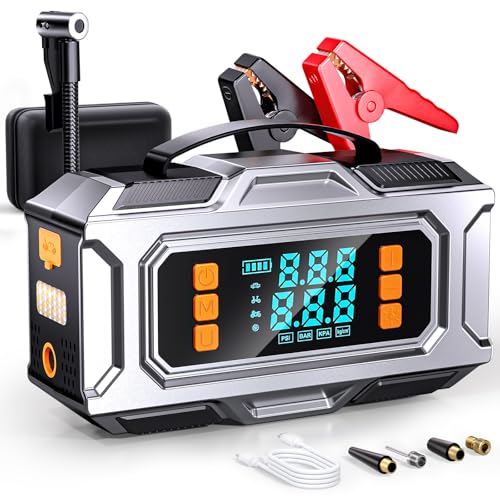

You walk to your garage on a cold morning, turn the key, and hear nothing but a clicking sound. A dead battery can disrupt your entire day. Finding the best car battery charger for the money ensures you are never stranded, whether you need a quick boost or a long-term maintainer.
This guide reviews seven top-rated chargers across different price points and use cases. We focus on smart features, charging speed, safety, and value. If you are looking for a reliable unit for your garage, check out our best car battery charger for home garage recommendations as well.


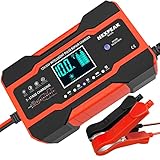
Buying Guide: How to Choose the Best Car Battery Charger for the Money
When you search for the best car battery charger for the money, you need to consider more than just the price tag. The right charger depends on your vehicle type, battery chemistry, and how often you use it. Here are the key factors we evaluated during our review.
Charging Speed and Current Output
Charging speed is measured in amps. A higher amperage, like 25A, can charge a large battery quickly, ideal for trucks and SUVs. Lower amperage, like 2A, is safer for small batteries like motorcycles or lawnmowers because it prevents overheating.
Consider your typical use. If you need a quick boost before heading out, a charger with an engine start mode or a high amp setting is worth the investment. For overnight maintenance, a lower amp trickle charger is sufficient.
Smart Features and Battery Compatibility
Modern chargers come with microprocessors that automatically detect battery voltage and adjust the charge rate. Look for models that support multiple battery types: lead-acid, AGM, gel, and increasingly LiFePO4 lithium. A smart charger will also prevent overcharging by switching to float mode.
Desulfation mode is another valuable feature. It helps break down sulfate crystals that build up on battery plates, extending the life of older batteries. This is a key differentiator for the best car battery charger for the money.
Safety and Protection
Safety should never be compromised. Look for chargers with reverse polarity protection, spark-proof connections, and short circuit prevention. A built-in temperature sensor is also crucial, especially if you live in areas with extreme cold or heat.
Some chargers have a winter mode that increases voltage in cold conditions, ensuring a full charge. Others have a summer mode to prevent overcharging in high temperatures. These features add to the long-term reliability of your battery.
Portability and Build Quality
If you travel or need to charge multiple vehicles, a compact and durable charger is essential. Aluminum housing and built-in cooling fans are signs of a well-built unit that can handle high amperage without overheating.
Also, check the length of the cables and the type of connectors. Ring terminals are great for permanent installation, while clamps are more versatile. For more insights, read our best car battery charger and maintainer guide.
Final Thoughts
After evaluating all seven chargers, our top pick for the best car battery charger for the money is the E-FAST 25A Smart Car Battery Charger for its rapid charging, versatile current settings, and robust aluminum build. If you need a budget-friendly option for basic maintenance, the MOTOPOWER MP00205A 12V 800mA Automatic Battery is an excellent value. Both offer smart features that protect your battery and extend its life.
Frequently Asked Questions
What is the best car battery charger for the money?
The best car battery charger for the money combines affordability, smart features, and reliable performance. Our top pick is the E-FAST 25A because it offers rapid charging, multiple current settings, and a durable design at a reasonable price.
Can I leave a smart charger connected all the time?
Yes, most smart chargers are designed to be left connected. They automatically switch to float mode once the battery is fully charged, maintaining the voltage without overcharging. This is ideal for seasonal vehicles.
How many amps do I need to charge a car battery?
For a standard car battery, a 10-amp charger is a good balance between speed and safety. For larger batteries like those in trucks or RVs, a 25-amp charger is better. For motorcycles, a 2-amp trickle charger is sufficient.
Will a charger work on a completely dead battery?
Many modern chargers have a boost or engine start mode that can revive a completely dead battery. However, if the battery is deeply discharged, it may need a longer charge time. Some chargers like the TowerTop have a repair mode for old batteries, but they cannot fix a physically damaged battery.
For more emergency solutions, consider a best battery jump starter for diesel trucks or a best cold weather jump starter for portable power.