

Picture this: you’re running late for an important meeting, you slide into the driver’s seat, turn the key, and all you hear is a clicking sound. The dreaded dead battery. It’s a scenario every driver fears, but with a reliable jump starter, you can be back on the road in minutes without waiting for a tow truck or a kind stranger. In this guide, we’ve evaluated the best jump starters on the market for 2026, comparing power, safety features, portability, and extra functionality to help you find the perfect roadside companion. Whether you drive a compact car, a heavy-duty truck, or an SUV, we’ve got you covered. If you’re also thinking about keeping your vehicle in top shape, check out our best code reader guide to diagnose any engine issues before they leave you stranded.




Buying Guide: How to Choose the Best Jump Starter
Not all jump starters are created equal. To make the right choice, you need to consider several key factors that affect performance, safety, and usability. Here’s what to look for.
Peak Current and Engine Compatibility
The peak current, measured in amps, determines how much power the jump starter can deliver to crank your engine. A higher peak current means the device can handle larger engines and more challenging starts. For a standard 4-cylinder car, a jump starter with 1000 to 2000 peak amps is usually sufficient. For V8s, trucks, or diesel engines, you’ll want something with 4000 amps or more.
Consider the engine size of your vehicle and any other vehicles you might need to help. The NOCO Boost GB70 with 2000A is a solid choice for most gas engines up to 8.0L, while the WOLFBOX MV24A with 4000A can handle up to 10L gas and diesel engines. Always match the jump starter’s capacity to your vehicle’s requirements.
Safety Features: Spark-Proof and Reverse Polarity Protection
Safety is paramount when dealing with car batteries. Look for jump starters with built-in protections against reverse polarity, short circuits, overcurrent, and overheating. Spark-proof technology is essential to prevent accidental sparks that could ignite battery gases. Many modern jump starters, like the NOCO Boost series, feature patented UltraSafe technology, which ensures foolproof connections every time.
Additionally, some models come with a “force start” or “boost” button that allows you to jump-start a completely dead battery (0V). This is a valuable feature if you often encounter severely discharged batteries. The GOOLOO GP4000 and S ZEVZO ET03 both include this functionality.
Extra Features: Power Bank, Air Compressor, and Lighting
Many jump starters double as portable power banks, allowing you to charge your smartphone, tablet, or other USB devices in an emergency. Some models, like the WOLFBOX MV24A, even include a built-in air compressor for inflating tires, making them a versatile emergency tool. Integrated LED flashlights with SOS and strobe modes are also common and can be lifesavers during nighttime breakdowns.
Consider what additional features would be most useful for your situation. If you frequently travel in remote areas, a model with a high-capacity power bank and a bright flashlight is invaluable. If you drive a large vehicle, an air compressor might be a game-changer. For more tools to keep your vehicle running smoothly, explore our best OBD2 scanner guide to monitor your car’s health.
Portability and Build Quality
A jump starter is only useful if you have it with you when you need it. Look for a compact, lightweight model that can easily fit in your glove box, trunk, or under a seat. The best units are built to withstand harsh conditions, with rugged, water-resistant housings and durable clamps. The Sharmeal 7000A, for example, is 80% smaller than traditional lead-acid boosters, making it incredibly easy to store.
Also, pay attention to the quality of the jumper cables and clamps. Heavy-duty metal clamps with strong springs ensure a secure connection and long-term reliability. Check that the unit has a clear battery status indicator, so you know it’s charged and ready to go. Our emergency tools page has more insights on building a complete roadside kit.
Final Thoughts
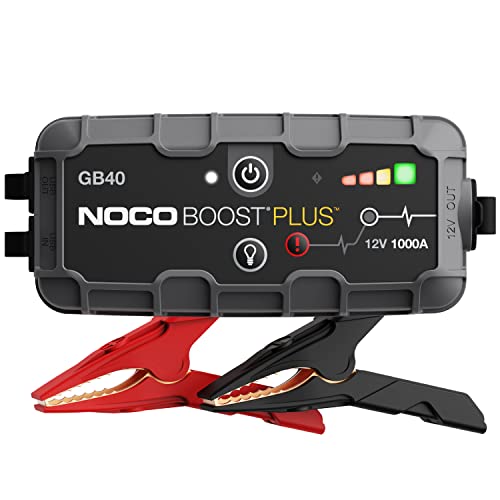
Choosing the best jump starter for your needs comes down to your vehicle’s engine size and the features you value most. For most drivers, the NOCO Boost GB40 12V 1000A UltraSafe offers an unbeatable balance of power, safety, and portability, making it a top pick for everyday use. If you need extra versatility, the WOLFBOX MV24A 4000A Jump Starter with 160PSI Air combines a powerful booster with an air compressor, perfect for road trips and outdoor adventures. No matter which you choose, you’ll have peace of mind knowing you’re prepared for the unexpected.
Frequently Asked Questions
Can a jump starter start a completely dead battery?
Yes, many modern jump starters are designed to start even a 0V battery. Models like the GOOLOO GP4000 and S ZEVZO ET03 feature a force start or boost function that temporarily overrides safety protections to deliver the necessary power. However, you should ensure the jump starter itself is fully charged before attempting this.
How many times can a jump starter start a car on a single charge?
The number of jump starts per charge varies by model and engine size. The NOCO Boost GB40 can deliver up to 20 starts on a full charge, while the GOOLOO GP4000 claims over 60 starts. Smaller engines require less power, so you’ll get more starts from a single charge. It’s always wise to recharge your jump starter every few months to maintain its health.
Are jump starters safe to use in the rain?
Most quality jump starters have an IP rating that indicates their resistance to water and dust. For example, the NOCO Boost series has an IP65 rating, meaning it’s protected against water jets and dust. However, you should always follow the manufacturer’s instructions and avoid submerging the device in water. Always ensure the clamps are dry and clean before connecting to the battery.
What’s the difference between a jump starter and a battery charger?
A jump starter provides a quick burst of power to start your vehicle’s engine, while a battery charger slowly replenishes the battery’s charge over time. Jump starters are portable and designed for emergency use, whereas chargers are typically larger and require a power outlet. For most drivers, a jump starter is the essential tool for roadside emergencies. If you’re also interested in diagnosing battery issues, our jump starters category has more details.


