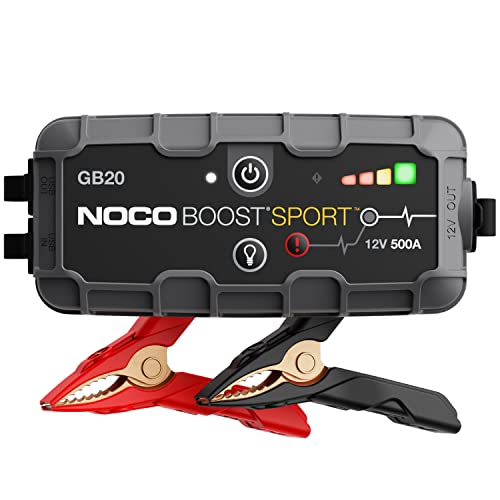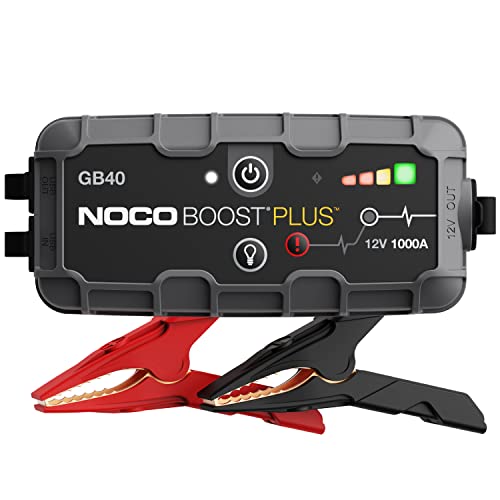

Picture this: you’re running late for work, you turn the key, and your car lets out that dreaded click-click-click. A dead battery can derail your entire day, but with a portable jump starter, you can be back on the road in minutes without waiting for a stranger with jumper cables. In this guide, we’ll walk you through exactly how to use a jump starter, from connecting the clamps to safety precautions, and we’ll highlight some of the best models available in 2026.
Whether you’re a seasoned driver or a first-time owner, this guide is for you. We’ll break down the process into simple steps, explain the key features to look for, and answer common questions. By the end, you’ll have the confidence to handle a dead battery like a pro. If you’re still deciding which unit to buy, check out our ultimate NOCO jump starter guide for top recommendations.



Buying Guide: What to Look for in a Jump Starter
Peak Current Rating
The peak current rating, measured in amps, determines how much power the jump starter can deliver to crank your engine. For most cars, a unit with 1000A to 2000A is sufficient. If you drive a large truck or SUV, you’ll need something beefier, like the best jump starters for trucks which often exceed 3000A.
Higher amperage also means faster starts in cold weather. The Doorii 8000A Jump Starter with Air Compressor, for instance, handles up to 10.0L gas engines, making it a powerhouse for heavy-duty use.
Safety Features
Modern jump starters come with built-in protections that prevent sparks, reverse polarity, and overcharging. These are non-negotiable for beginners. Look for spark-proof technology and reverse-polarity alarms, like those on the Bullseye SafetyXL 1000A Car Battery Jump Starter.
Smart cables with LED indicators take the guesswork out of connections. The YETOR 10AWG EC5 Jump Starter Cable even offers anti-recharge protection to stabilize the circuit.
Portability and Extra Features
Consider how you’ll carry the device. Compact units fit in a glovebox, while larger ones with air compressors are better for road trips. The Doorii 6000A Jump Starter with Air Compressor doubles as a tire inflator, which is a lifesaver on long drives.
Many models also serve as power banks for charging your phone. If you often travel in remote areas, choose a unit with a bright LED flashlight and SOS strobe, like the 400-lumen light on the Doorii models.
Final Thoughts
Mastering how to use a jump starter is a simple skill that can save you time and money. For most drivers, we recommend the Doorii 8000A Jump Starter with Air Compressor for its high power and built-in air pump, while the Bullseye SafetyXL 1000A Car Battery Jump Starter is a solid budget-friendly choice for smaller vehicles. Both offer reliable performance and safety features that make jumping your car a breeze.
Frequently Asked Questions
Can a jump starter be used on any vehicle?
Most portable jump starters work with 12V vehicles, including cars, motorcycles, SUVs, and boats. However, check the engine size rating. For example, the Bullseye SafetyXL handles up to 6.0L gas engines, while the Doorii 8000A supports up to 10.0L gas and 9.0L diesel. Always match the unit’s capacity to your vehicle’s engine.
How long does a jump starter hold its charge?
Most lithium-ion jump starters can hold a charge for several months, but it’s wise to recharge them every 3 to 4 months. Units like the Bullseye SafetyXL offer up to 18 jump starts per charge, so you won’t need to recharge frequently unless you use it often.
Is it safe to use a jump starter in the rain?
Many modern jump starters have weather-resistant shells, but you should still avoid exposing the clamps to moisture. The Doorii models are built with a rugged, rain-resistant shell, but always dry the battery terminals and clamps before connecting. For more safety tips, read our NOCO boost plus GB40 review.
Can I jump start a car without another vehicle?
Absolutely. That’s the beauty of a portable jump starter. You don’t need a second car. Just connect the clamps to your battery, turn on the unit, and start your engine. It’s that simple.