

You’re driving home when the check engine light pops on. Panic sets in. What’s wrong? How much will this cost? Before you rush to a mechanic, you can take control with an OBD2 scanner. This small device plugs into your car’s computer port and reveals the exact issue, saving you time and money. In this guide, we’ll walk you through how to use an OBD2 scanner, from locating the port to interpreting codes, and we’ll review seven top-rated models to help you choose the right one.
Whether you’re a beginner or a seasoned DIYer, this guide covers everything you need to know. We’ll explain the key features to look for, how to read and clear codes, and how to use live data to diagnose problems. Plus, we’ll share our top picks for every budget and skill level. If you’re new to diagnostics, you might also want to check out our comparison of code readers vs. scan tools to understand the difference.


Buying Guide: What to Look for in an OBD2 Scanner
Compatibility with Your Vehicle
Not all OBD2 scanners work with every car. Most support the standard OBD2 protocols (CAN, ISO9141, KWP2000, J1850 VPW/PWM), but some vehicles, especially older or European models, may need specific support. Before buying, check the product’s compatibility list. For example, the FOXWELL NT301 OBD2 Scanner Live Data works with 10,000+ vehicles, while the V380 OBD2 Scanner for Check Engine Light is limited to 1996+ gasoline cars.
If you own a hybrid, electric, or diesel vehicle, verify that the scanner explicitly supports it. Many budget models don’t. For a broader overview, browse our OBD2 scanner category to compare options.
Read and Clear Codes
The core function of any OBD2 scanner is to read diagnostic trouble codes (DTCs) and clear them after repairs. Look for a scanner that displays code definitions on-screen, so you don’t need to look them up online. The ANCEL AD410 Enhanced OBD2 Scanner includes a 42,000+ DTC lookup library, making it ideal for beginners.
Clearing codes is straightforward, but remember: if the underlying issue isn’t fixed, the light will come back. Some scanners, like the FOXWELL NT301, only clear codes after the problem is resolved, preventing false passes.
Live Data and Advanced Features
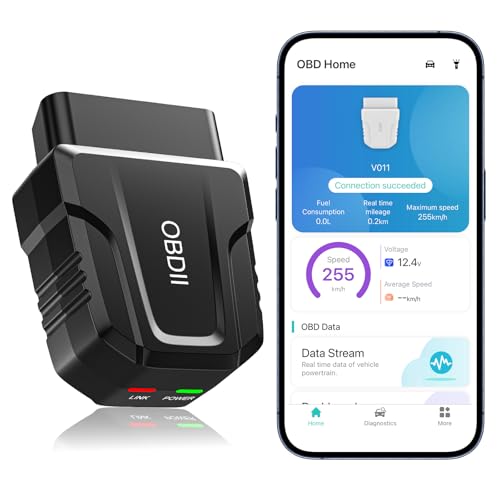
Basic code readers show only codes, but for deeper diagnosis, you need live data streaming. This lets you see real-time sensor readings like RPM, coolant temperature, and oxygen sensor voltage. The Innova 5210 OBD2 Scanner & Engine Code Reader offers live data plus battery testing, while the OBD2 Scanner Diagnostic Tool (Bluetooth) turns your smartphone into a powerful dashboard with charts and graphs.
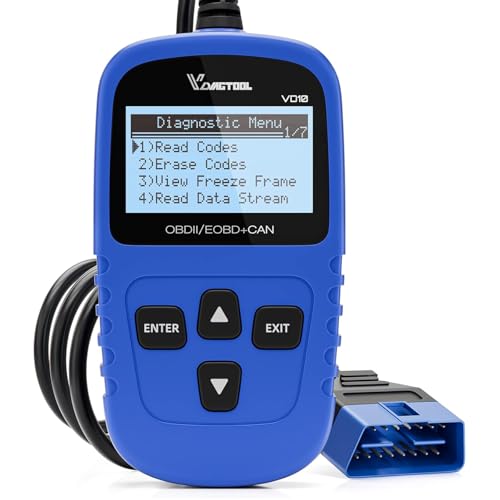
If you plan to do smog checks, look for I/M readiness monitoring. This feature tells you if your vehicle’s emissions monitors are ready for inspection. The VDIAGTOOL VD10 OBD2 Scanner Check Engine Code includes this, along with freeze frame data to capture the moment a fault occurred.
Final Thoughts
Choosing the right OBD2 scanner depends on your needs. For a budget-friendly, no-frills option that gets the job done, the V380 OBD2 Scanner for Check Engine Light is perfect for quick code reads. If you want professional-grade diagnostics with live data and smog readiness, the FOXWELL NT301 OBD2 Scanner Live Data is our top pick. Both are reliable, easy to use, and will pay for themselves with the first repair you avoid.
Frequently Asked Questions
How do I connect an OBD2 scanner to my car?
Locate the OBD2 port, usually under the dashboard on the driver’s side. Plug the scanner into the 16-pin connector, turn the ignition to the ON position (engine off), and the scanner will power up. Some models require you to press a button to initiate communication.
Can I clear the check engine light with an OBD2 scanner?
Yes, most OBD2 scanners can clear codes and turn off the check engine light. However, if the underlying problem isn’t fixed, the light will reappear after a few drive cycles. Always repair the issue before clearing codes.
What is live data on an OBD2 scanner?
Live data shows real-time readings from your vehicle’s sensors, such as engine RPM, coolant temperature, and fuel trims. This helps you diagnose issues that don’t trigger codes, like a failing oxygen sensor. Scanners like the MOTOPOWER MP69033 Car OBD2 Scanner Code Reader display this data in graphs or lists.
Do I need a professional mechanic to use an OBD2 scanner?
No, OBD2 scanners are designed for DIYers. Most models are plug-and-play with intuitive menus and built-in code definitions. For more advanced features, like ABS or SRS diagnostics, you may need a professional-grade tool, but for engine issues, a basic scanner suffices. For more insights, read our ANCEL AD310 review to see how even budget options perform.


