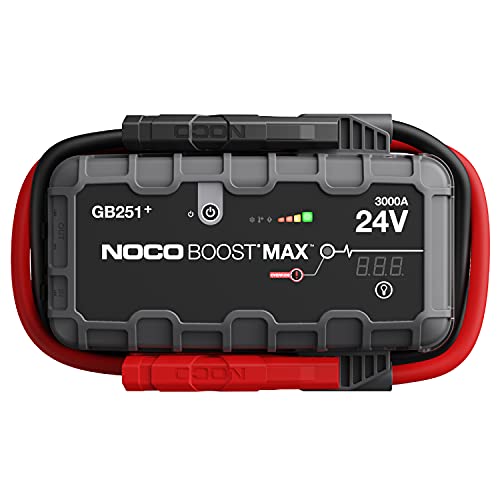

Imagine this: you are running late for work, you turn the key, and your car battery is completely dead. A dead battery can ruin your day, but with a reliable best auto jump starter, you can be back on the road in minutes. This guide covers the top portable jump starters for 2026, helping you choose the right one for your vehicle and needs. Whether you drive a compact car or a heavy-duty diesel truck, we have you covered. For more on emergency roadside tools, check out our Emergency Tools category.



Buying Guide
Peak Current and Engine Size
The peak current, measured in amps, determines how much starting power the jump starter delivers. For a standard 4-cylinder gas engine, a unit with 1000 to 2000 peak amps is sufficient. Larger V8 gas engines or diesel engines require higher ratings, often 3000 amps or more. Always check your engine’s displacement and choose a jump starter that exceeds the minimum requirement for reliable starts.
For example, the NOCO Boost GB70 2000A UltraSafe Jump Starter handles engines up to 8.0L gas and 6.0L diesel, while the OXILAM Jump Starter 6000A for All Gas/12L Diesel tackles even larger engines. If you own a diesel truck, you might also want to read our Best Battery Jump Starter for Diesel Trucks guide.
Additional Features: Air Compressor and Power Bank
Many modern jump starters double as portable power banks and tire inflators. An integrated air compressor is a lifesaver when you have a low tire, and a built-in power bank can charge your phone or tablet during emergencies. Look for models with fast-charging USB ports (like USB-C PD) and a bright LED flashlight with SOS and strobe modes.
The YaberAuto 5000A Car Jump Starter with Air offers a 150 PSI tire inflator, while the JOLTEKON Car Battery Jump Starter with Air Compressor 4500A 150PSI combines both functions. For more options, see our Best Car Jump Starter and Tyre Inflator Combos.
Safety and Durability
Safety features like spark-proof technology, reverse polarity protection, and overcharge protection are essential. A rugged, water-resistant housing (IP65 or higher) ensures the device survives drops and weather. Some models, like the NOCO Boost series, feature patented UltraSafe technology for foolproof connections.
For cold weather performance, check the operating temperature range. Many units work from -4°F to 140°F, making them reliable in winter. If you live in a cold climate, our best cold weather jump starter guide is worth reading.
Portability and Battery Capacity
Compact size and lightweight design are important for easy storage in a glove box or trunk. Battery capacity, measured in watt-hours (Wh), determines how many jumps you get per charge and how well it serves as a power bank. A 74Wh unit like the S ZEVZO ET03 Car Jump Starter 4000A Jump Starter offers a good balance between power and portability.
Larger capacity models, such as the WOLFBOX 4000A Jump Starter,12V Car Battery Jumper with 88.8Wh, provide more jump starts and can charge laptops. For a deeper dive into battery capacities, see our Best Lithium Battery Jump Starter article.
Final Thoughts
Choosing the right jump starter depends on your vehicle and how you plan to use it. For most drivers, the compact and reliable NOCO Boost GB40 12V 1000A UltraSafe offers excellent value with proven safety features. If you need extra power for larger engines or want the convenience of an air compressor, the YaberAuto 5000A Car Jump Starter with Air is a versatile all-in-one solution that handles both dead batteries and low tires with ease.
Frequently Asked Questions
How do I choose the right jump starter for my car? Match the peak current to your engine size. For most cars, 1000 to 2000 amps is enough. For larger SUVs or diesel engines, look for 3000 amps or more. Also consider additional features like a built-in air compressor or power bank.
Can a jump starter damage my car’s electronics? Quality jump starters with spark-proof and reverse polarity protection are safe. Always follow the instructions and connect the clamps correctly. Models like the NOCO Boost series are certified safe for modern vehicles.
How often should I recharge my jump starter? Recharge your jump starter every 2 to 3 months to maintain battery health. Most units have a standby time of 12 to 24 months. A quick recharge before a long trip ensures it is ready when needed.
What is the difference between peak amps and cranking amps? Peak amps are the maximum current the jump starter can deliver in short bursts for starting. Cranking amps are a standard measure for traditional batteries. For jump starters, peak amps are more relevant. Most portable units list peak amps.